Why Proposals Matter for Winning Work
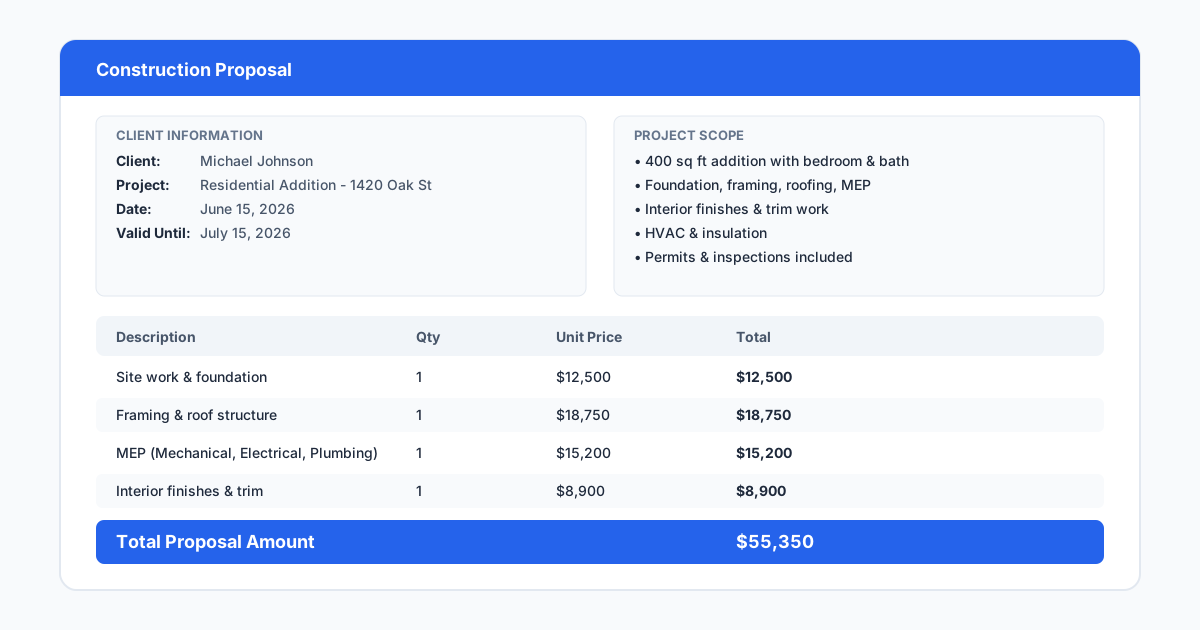
A construction proposal is more than a price. It is the document that communicates scope, timeline, payment terms, exclusions, and the contractor's professionalism in one package. Homeowners and commercial clients compare proposals side by side, and the difference between winning and losing often comes down to clarity and completeness rather than price alone. A proposal that includes a clear scope description, a project timeline, payment milestones, and a visual of the work conveys competence before the first conversation happens.
The problem for most contractors is that proposals take too long to produce. Writing a scope from scratch for every bid, copying terms from a previous job, formatting pricing tables, and attaching documents manually eats hours that could go toward bidding more projects or refining pricing. Proposal software addresses this by storing templates, standard terms, reusable line items, and automated workflows that cut proposal creation from an hour to ten minutes.
Beyond speed, proposal software improves consistency. Every proposal follows the same structure, includes the same required sections, and presents the same professional format. Clients notice when a proposal looks put together. A contractor who sends a clean, branded proposal with a drawing attached and an e-signature link built in signals that they run their business the same way they will run the project.
There is also a defensive value to professional proposals. A detailed, written proposal with clear exclusions, payment terms, and scope boundaries reduces the likelihood of disputes after the job starts. When a client later claims that they expected the proposal to include something that was not priced, the written document serves as the record of what was actually agreed upon. Proposal software with version history and timestamped approvals strengthens that protection further.
What Makes Great Proposal Software
Template management is the foundation. Good proposal software lets the contractor create templates for different project types, store them in a library, and generate a new proposal from a template with prewritten scope language, standard terms, and pricing tables. A deck builder might have a template for pressure-treated decks, one for composite decks, and one for roof decks, each with the appropriate materials, typical labor assumptions, and standard exclusions preloaded.
E-signature integration is the feature that actually closes deals. A proposal that requires the client to print, sign, scan, and email is a proposal that will sit on a counter for three days. A proposal with a click-to-sign button can close the same day the contractor presents it. Most proposal platforms include e-signature natively, though the specific capabilities vary. Some allow multiple signers for commercial jobs where both partners or board members need to sign.
Pricing and line item flexibility matters more than contractors expect. Some jobs need a simple total price. Others require detailed cost breakdowns by trade, phase, or material category. Good proposal software supports both approaches without forcing the estimator into a rigid format. The ability to include allowances, alternates, and unit prices in the same document lets the contractor present options without creating multiple versions.
Integration with estimating and project management tools closes the loop. The best setup is one where the estimator builds the price in their estimating software, the proposal pulls from those numbers automatically, and when the client signs, the project gets created in the management platform with the budget already populated. Every manual transfer between systems introduces the risk of a typo or omission.
- Templates with reusable scope language and terms
- Built-in e-signature with optional multiple signers
- Flexible pricing formats, detailed breakdowns, and allowances
- Integration with estimating and project management platforms
- Branded proposal output with logo and company colors
- Mobile-friendly viewing and signing on any device
Top Proposal Software Options Compared
Houzz Pro is the strongest option for remodelers and design-build contractors who need both lead generation and proposal tools. The proposal builder includes templates, e-signature, and the ability to attach product catalogs and mood boards. Pricing starts around $150 per month for the basic plan and climbs with additional features. The bundled approach works well for contractors who want to manage marketing, leads, and proposals in one platform.
JobNimbus offers proposal tools built on top of its CRM and project management platform. It is especially popular with roofing, siding, and exterior contractors. Proposals can include photos, measurements, and price breakdowns. E-signature is built in, and signed proposals convert into jobs automatically. Pricing starts around $200 per month. JobNimbus works best for contractors who run a high volume of smaller projects and need CRM functionality as much as proposal features.
Proposal software from Proposify and PandaDoc are document-focused platforms that work across industries but are widely used by contractors. They offer polished templates, drag-and-drop editing, e-signature, and payment collection. These tools shine when the contractor already has an estimating workflow and needs a professional proposal layer on top. Pricing ranges from $50 to $150 per month depending on features and document volume.
Buildertrend and CoConstruct both include proposal and change order features as part of their broader construction management platforms. For contractors already using either platform for project management, using the built-in proposal tools eliminates the need for a separate subscription. The proposal capabilities are functional but less polished than dedicated proposal platforms.
MeasureSquare is a lesser-known option that serves contractors who need takeoff, estimating, and proposal generation in a single tool. It is popular in the flooring and wallcovering trades but generalizable to any contractor who works from measured quantities. The proposal output is basic but functional, and the takeoff-to-proposal workflow is seamless because it happens in one application.
For contractors who send the same type of proposal repeatedly, specialized platform alternatives like Invoice2go and WorkflowMax offer simple quoting tools with built-in invoicing and payment collection. These tools lack the depth of dedicated proposal software but cover the essentials for contractors whose proposals are primarily pricing documents with minimal scope language.
Including Drawings in Proposals
A proposal with a drawing closes faster than one without. When a client sees a scaled layout of their deck, fence, addition, or site work alongside the price, they are approving a specific scope rather than a concept. The drawing removes ambiguity about what the price covers and gives the client confidence that the contractor has thought through the details. Contractors who include drawings in their proposals report fewer scope disputes and shorter decision cycles.
The challenge is that most proposal platforms do not include drawing tools. Contractors either sketch by hand and scan, use a CAD tool they barely know, or skip drawings altogether. SiteBuildHub Draft solves this by letting contractors create scaled, dimensioned drawings in the browser and export them as PNG or PDF for embedding in proposals. A deck contractor can draw the deck plan, label the materials, dimension the layout, and drop the export into their proposal in under twenty minutes.
The combination of proposal software plus a drawing tool creates a complete bid package. The proposal software handles the terms, pricing, and signature. SiteBuildHub provides the visual scope document. Together they present a professional, defensible bid that stands out from the dozen text-only proposals the client is comparing.
Pricing Considerations for Proposal Software
Proposal software pricing varies widely based on features, document limits, and team size. Standalone proposal platforms like Proposify and PandaDoc range from $50 to $150 per month for individual users. Platforms that bundle proposals with broader functionality, like Houzz Pro and JobNimbus, start higher but may replace other subscriptions. Construction management platforms with built-in proposals add minimal incremental cost but may lack the polish of dedicated tools.
Contractors should evaluate total cost rather than monthly price alone. A $50 proposal tool that creates friction because it does not integrate with the estimating process will end up costing more in time than a $150 tool that connects directly. Similarly, a proposal tool that generates no incremental cost because it is included in an existing platform may be the right choice even if its templates are less flexible.
Most proposal platforms offer free trials between seven and fourteen days. Contractors should use this time to create a real proposal for an actual upcoming bid. That test reveals whether the template system works for their trade, whether the e-signature process is smooth for their clients, and whether the export or integration options fit their workflow. A test with real stakes gives much better information than a guided demo.
One pricing detail that catches contractors off guard is document storage limits. Some proposal platforms limit the number of active proposals, the file size of attachments, or the total storage available on lower-tier plans. A contractor who includes high-resolution drawings and photos in every proposal can hit those limits quickly. Check the storage and attachment policies on your target plan before committing, and ask what happens when you exceed the limit.