Why some bids win and others do not
Every contractor has lost a bid and wondered why. You priced the job fairly, your experience is solid, and your references are good. But the client chose someone else. The reason is rarely just price. In most cases, the winning bidder did something better: they communicated more clearly, they demonstrated more understanding of the project, or they made the client feel more confident.
Clients hire contractors they trust. Price matters, but trust matters more. A client will pay a reasonable premium for the contractor who explains the process clearly, answers questions thoroughly, and presents a professional proposal. The bid that wins is the one that answers the client's unspoken question: can I trust this person with my project?
Winning bids consistently share three characteristics. First, they are built on a complete scope — no gaps, no vague allowances, no assumptions. Second, they are presented professionally with clear formatting, project drawings, and written scope descriptions. Third, they show up on time and follow up consistently. These are not expensive advantages. They are habits that cost nothing but attention.
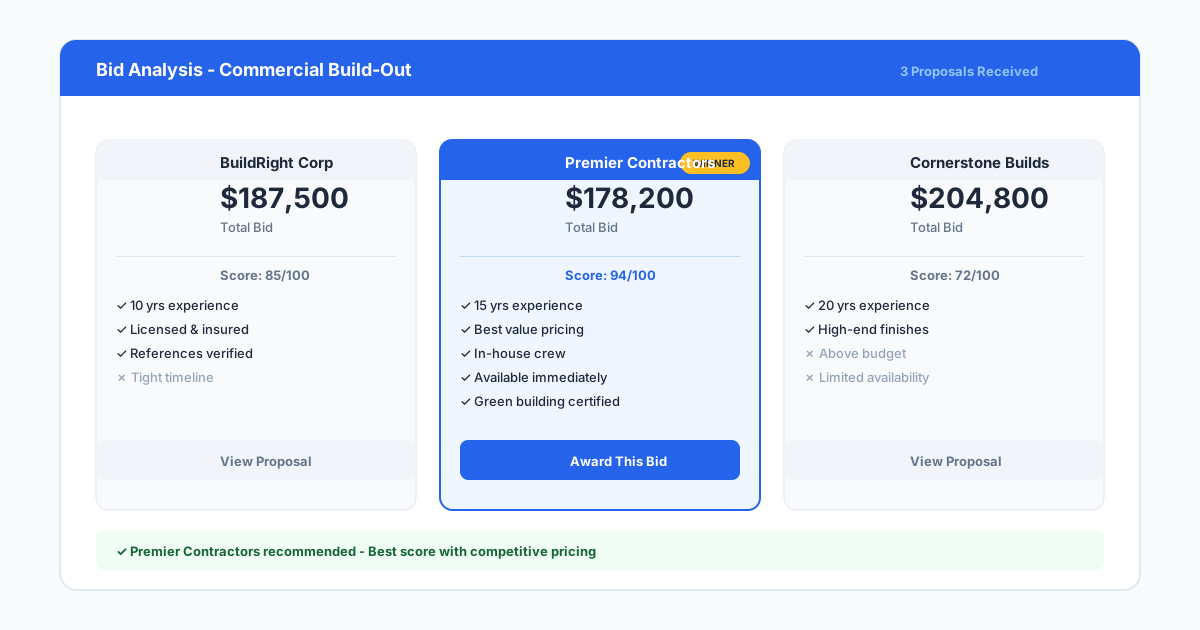
Winning bids combine accurate pricing with professional presentation and clear communication.
Know your customer before you write a bid
The most effective thing you can do to win more bids happens before you write a single number: understand who you are bidding to. A homeowner who has never done a renovation has different concerns than a property manager who handles twenty units a year. A client who has been burned by a previous contractor will respond to different signals than someone building their first home.
During your first conversation or site visit, listen for what matters most to the client. Are they worried about timeline? Budget? Cleanliness? Disruption to their daily life? The answers tell you what to emphasize in your proposal. If they are worried about timeline, include a detailed schedule. If they are worried about cleanliness, describe your site protection and daily cleanup procedures.
Ask about their decision criteria directly. 'What factors are most important to you in choosing a contractor?' is a fair question that clients appreciate. Their answer tells you exactly how to position your bid. If they say price is secondary to quality, do not lead with your price. Lead with your quality standards, your material selections, and your experienced crew.
Tailor your proposal to address their specific concerns, but do not fabricate capabilities you do not have. If a client needs a project completed by a tight deadline and your crew is currently stretched thin, be honest about what you can deliver. Winning a bid you cannot execute well damages your reputation and costs more than losing the bid.
- Ask what matters most — timeline, budget, quality, communication — before you bid
- Listen for past contractor experiences that shape their expectations
- Tailor your proposal to address the client's specific concerns
- Be honest about your capacity and capabilities
- Document everything the client tells you about their priorities
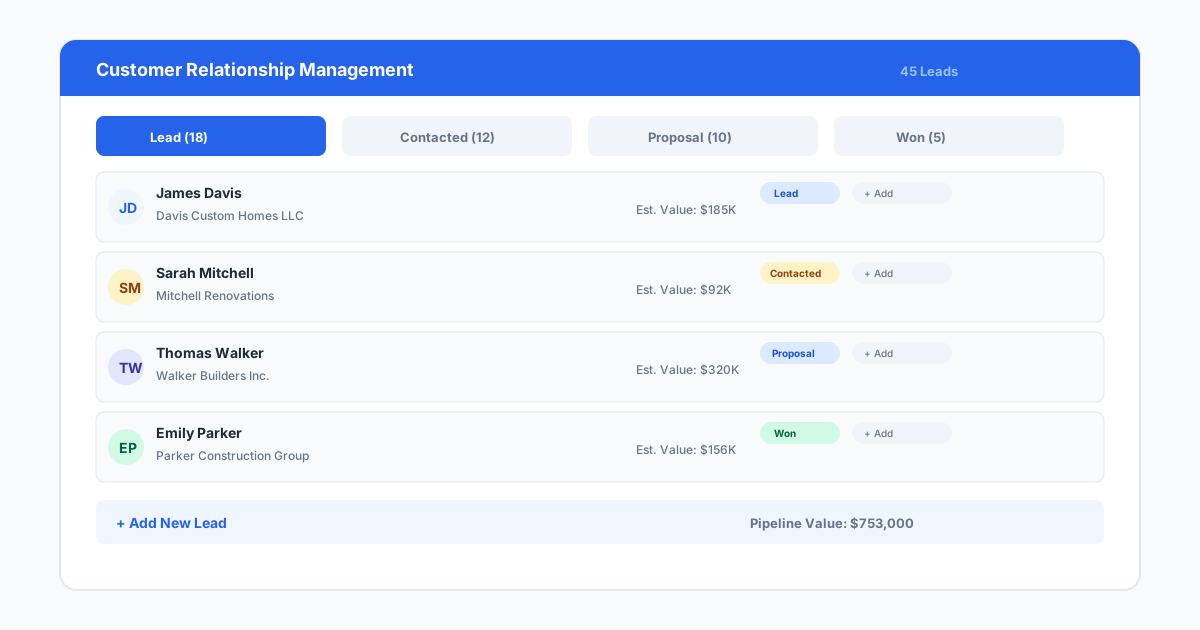
The best bids start with listening. Understand what the client values before you price the work.
Build proposals that sell, not just quote
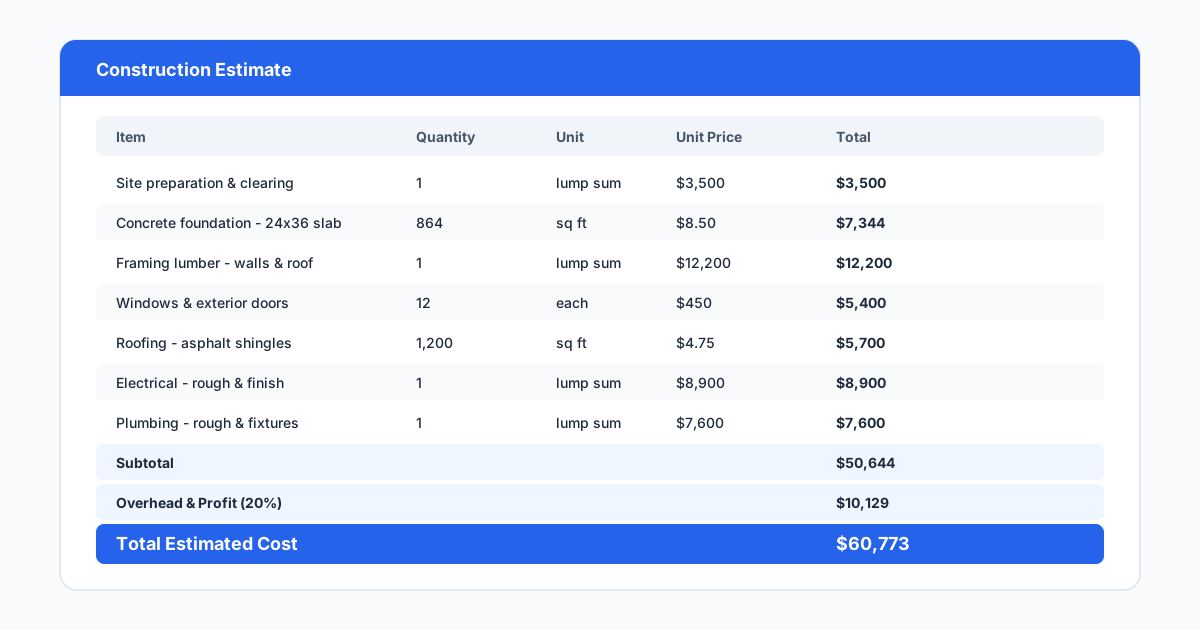
A proposal is different from an estimate. An estimate lists prices. A proposal sells the solution. The difference is in how you present the information, what you include beyond the numbers, and how you frame the value. A well-built proposal makes the client feel like they are hiring a partner, not just buying a price.
Start your proposal with a project summary that shows you understand the work. Describe the scope in your own words, reference the conversations you had during the site visit, and mention any specific details the client shared. This section alone signals that you paid attention and that your bid is based on their actual project, not a template.
Include a project schedule that shows key milestones and the expected completion date. A schedule demonstrates that you have thought through the work sequence and that you respect the client's time. Even a simple timeline with three or four phases — demolition, rough-in, finishes, final — is more professional than a proposal with no schedule at all.
Add project drawings or sketches if the scope involves layout decisions. A dimensioned drawing of a deck, fence, or addition shows the client exactly what they are approving. It also reduces the chance of a scope dispute later. If you do not have drawings, reference the site visit photos and measurements in your proposal.
Include your license and insurance information, a brief company background, and two or three relevant references. These trust signals belong in the proposal, not buried in a separate document. The client should not have to ask for proof of insurance — it should be in the proposal they are evaluating.
- Write a project summary that demonstrates your understanding of the work
- Include a project schedule with key milestones
- Add drawings or sketches for any scope involving layout decisions
- Include license, insurance, and references directly in the proposal
- Format the proposal professionally with your company branding
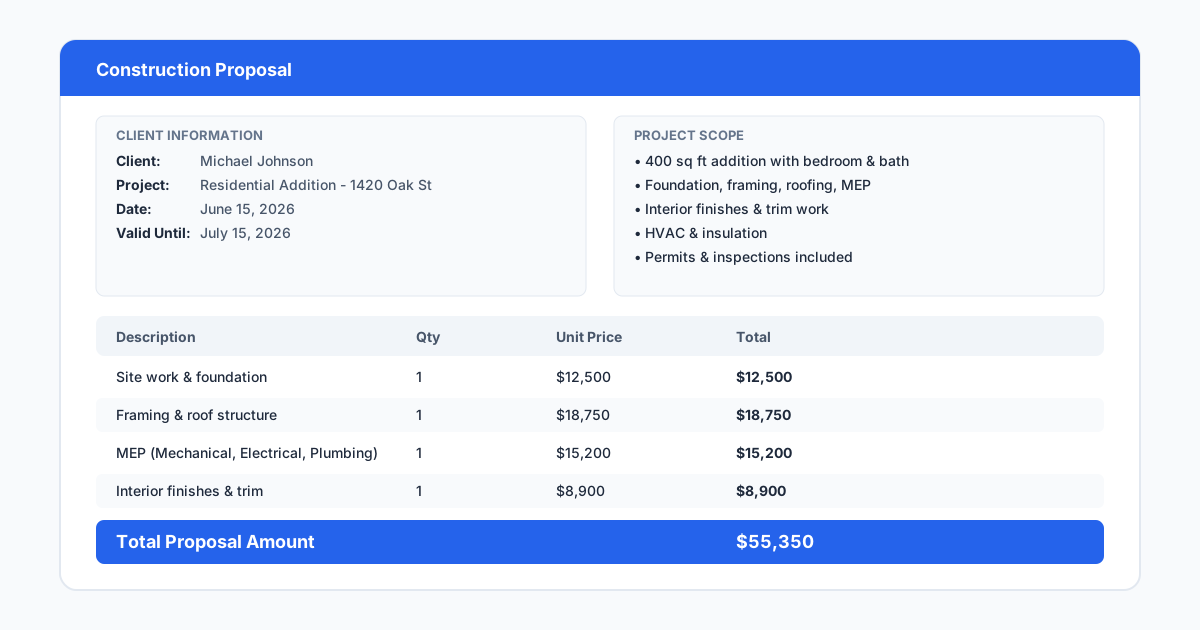
A proposal that demonstrates understanding and professionalism wins more bids than a price list.
Price competitively without racing to the bottom
Competitive pricing does not mean being the cheapest. It means delivering value that justifies your price. The contractor who bids $5,000 less than you on a $50,000 project is not a threat if you can show the client why your bid is $5,000 more. The difference may be better materials, a longer warranty, more detailed scope, or a more experienced crew. The key is communicating that difference.
Use a value-based pricing approach for jobs where you have a clear advantage. If you specialize in historic home renovations and the project is a century-old house, your expertise is worth a premium. If you have a relationship with a supplier that gives you better material pricing, that is an advantage you can pass along or convert to margin.
Avoid the trap of lowering your price to win a bid. Once you discount your price, you have set a precedent that your prices are negotiable. The client who gets a discount on the bid will expect the same treatment on change orders. And if you win at a discounted price, you start the project already behind on margin. A single project at full margin is better than two projects at half margin.
When you encounter a price-sensitive client, emphasize the cost of choosing the lowest bidder. Frame it carefully: 'I understand there are lower prices available. I want you to understand what my price includes that others may not. The choice is yours, but I want you to make an informed decision.' This positions you as confident and transparent, not desperate.
Know your walk-away number for every job type. If the margin on a project does not meet your minimum threshold, be willing to walk away. A year-end review of your most profitable jobs will likely show that the jobs you almost turned down — but took at good margins — were more profitable than the jobs you discounted to fill the schedule.
- Communicate the value difference, not just the price difference
- Use value-based pricing where you have a clear expertise advantage
- Avoid discounting your price — it sets a dangerous precedent
- Know your walk-away margin for every job type
- Emphasize the risk of choosing the lowest bidder without criticizing competitors
Follow up effectively after sending the bid
Most contractors send a bid and wait for the phone to ring. The ones who win more bids follow up. A follow-up call or email a few days after sending the proposal is not pushy. It is professional. It shows the client that you are attentive and that you care about their decision.
When you follow up, do not ask 'did you get my bid?' Ask something more helpful: 'I wanted to see if you have any questions about the proposal that I can answer. I know there is a lot to consider.' This invites conversation rather than putting the client on the defensive. If they have questions, answer them immediately. If they are comparing bids, offer to review the scope differences.
Timing matters. Follow up within three to five business days of sending the bid. Any sooner feels impatient. Any later feels indifferent. If the client says they are still deciding, ask if there is a specific date they expect to make a decision and offer to check back then. This keeps the door open without pressuring them.
Track your follow-up in a simple system — a spreadsheet, a CRM, or even a notebook. Record the date you sent the bid, the date you followed up, the response, and the outcome. Over time, this data shows you which follow-up strategies work and what your typical close rate looks like. Contractors who track their follow-up win 20 to 40 percent more bids than those who do not, simply because they do not lose bids by forgetting to follow up.
- Follow up within 3-5 business days of sending the bid
- Ask helpful questions, not pushy ones
- Offer to review scope differences if they are comparing bids
- Track every bid, follow-up, and outcome in a simple system
- Contractors who track follow-ups win significantly more bids
Leverage drawings in your bids
A bid that includes a drawing wins more often than a bid that includes only a price. A drawing removes ambiguity. It shows the client exactly what they are buying — the deck shape, the fence line, the addition footprint. When a client can see the project drawn to scale with dimensions and notes, they make decisions faster and with more confidence.
You do not need CAD software or drafting skills to include a drawing in your bids. Simple browser-based drawing tools like SiteBuildHub Draft let you create scaled site plans, deck layouts, fence plans, and floor plans in minutes. Export the drawing as a PDF and include it in your proposal. The time investment is fifteen to thirty minutes. The return is a measurable increase in your win rate.
Drawings also protect you after the bid is accepted. The drawing the client approved becomes the scope baseline. When questions come up during construction — 'I thought the deck was supposed to be wider' — you have a signed document showing what was approved. Scope disputes that would have required a compromise are resolved by referencing the drawing.
For clients comparing multiple bids, a drawing sets you apart. Most contractors send a text or a one-page quote. You send a professional proposal with a scaled drawing. The visual advantage is real. Clients perceive the contractor with the drawing as more organized, more professional, and more likely to deliver the project as planned.
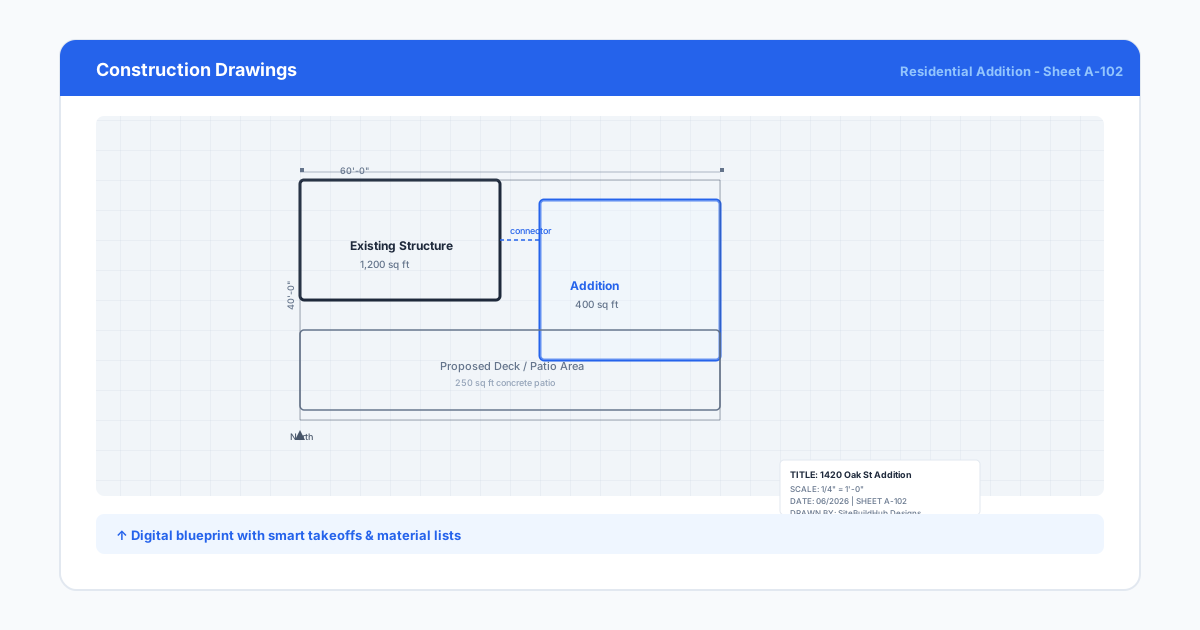
Bids with professional drawings win more often than bids with prices alone.
Track your win rate and improve over time
Every bid you send is data. Track your win rate by job type, client type, price range, and season. The patterns will tell you where you are strongest and where you need to improve. If you win 70 percent of deck bids but only 30 percent of kitchen bids, you know where to focus your proposal improvements.
Analyze the bids you lose to understand why. If the client will tell you, ask. 'We would appreciate your honest feedback on why you chose another contractor' is a reasonable request that many clients will answer. The feedback may be hard to hear, but it is the most valuable data you can collect. If three clients in a row say your price was too high, your pricing needs adjustment. If they say another contractor was more thorough, your proposals need work.
Compare your winning bids to your losing bids. What did the winning proposals include that the losers did not? Was it the drawing? The schedule? The detailed scope? The follow-up? The comparison will reveal the specific factors that make the difference for your business in your market.
Set a target win rate and review it quarterly. A 40 to 50 percent win rate is healthy for most contractors. Below 30 percent suggests your pricing or presentation needs adjustment. Above 70 percent suggests you may be pricing too low. Use the data to make deliberate adjustments and track whether they improve your results.
- Track win rate by job type, client type, price range, and season
- Ask lost clients for honest feedback on why they chose someone else
- Compare winning and losing proposals to identify what makes the difference
- Target a 40-50% win rate and adjust pricing and presentation accordingly
- Review win rate data quarterly and make deliberate improvements